Observe
A calibrated bedside camera captures spontaneous movement without adding a wire or interrupting routine care.
Highlighted research · NICU video intelligence
Critically ill infants are surrounded by continuous monitors, yet neurologic observation remains intermittent. We ask whether routine video can add a contactless, continuous measure of movement and state.
Read the rationale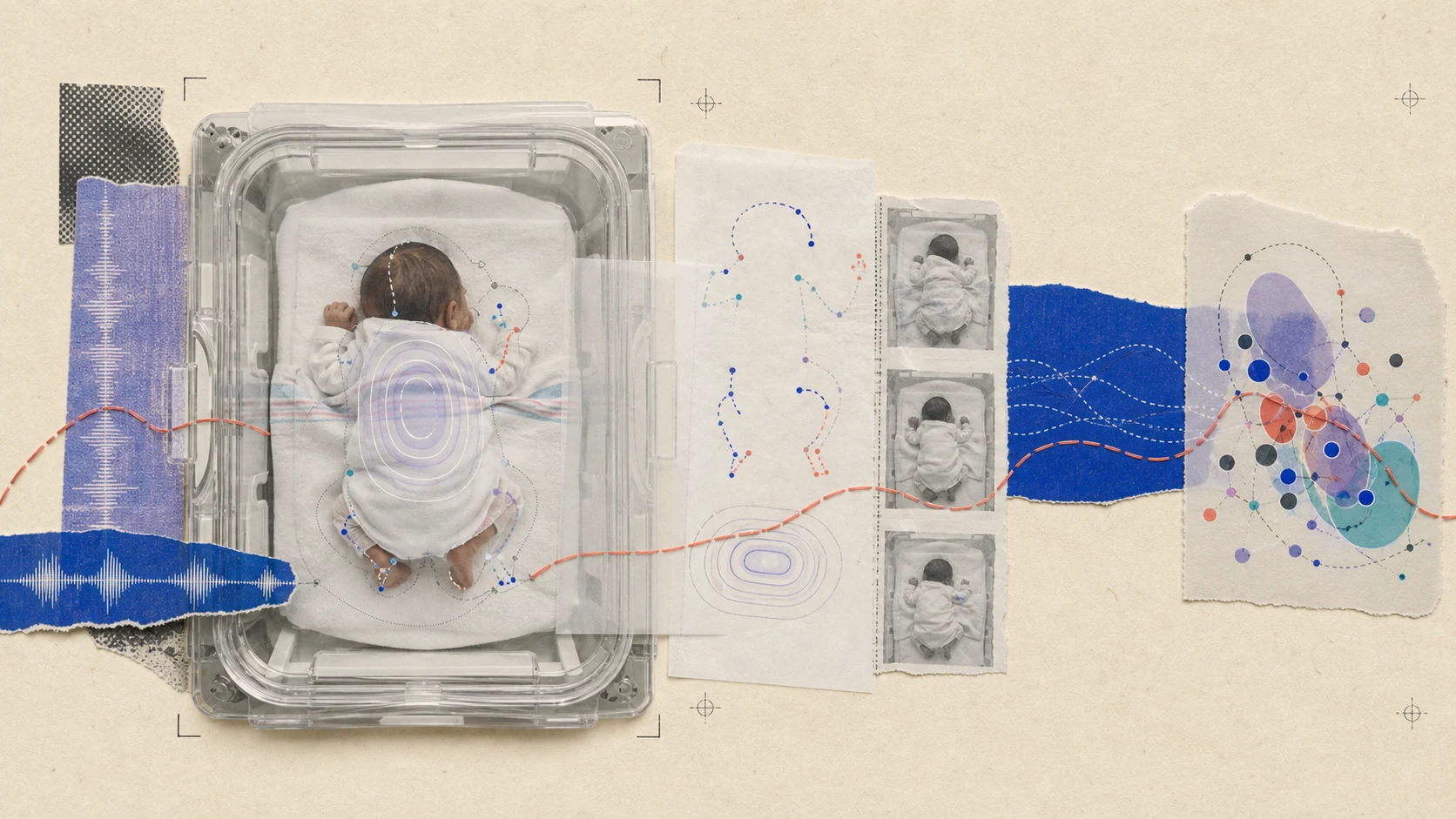
Rationale
Cardiorespiratory signals are measured continuously, but infant movement, alertness, and response are usually evaluated through brief observations. Those behaviors contain information about neurologic state that conventional monitors do not preserve. Continuous observation should not require another sensor on the infant.
Contactless video, interpreted across time, can transform spontaneous infant movement into digital biomarkers of neurologic state.
What we’re building
A contactless system designed to complement the clinical exam and help clinicians review change across hours and days.
A calibrated bedside camera captures spontaneous movement without adding a wire or interrupting routine care.
Pose, depth, movement amplitude, symmetry, and temporal patterns are interpreted against development and patient baseline.
Notable changes and reviewable video moments are presented alongside the clinical record for clinician interpretation.
The goal is not autonomous neurologic diagnosis. It is to preserve the clinical information in movement and make changes between exams easier to recognize and review.