Perform
A patient or caregiver records a guided movement task with a phone or completes a standardized drawing task on a tablet.
Highlighted research · At-home digital biomarkers
Rare neurologic disease unfolds between infrequent visits. We're testing whether motor tasks captured with everyday devices can provide a more continuous picture of functional state.
Read the rationale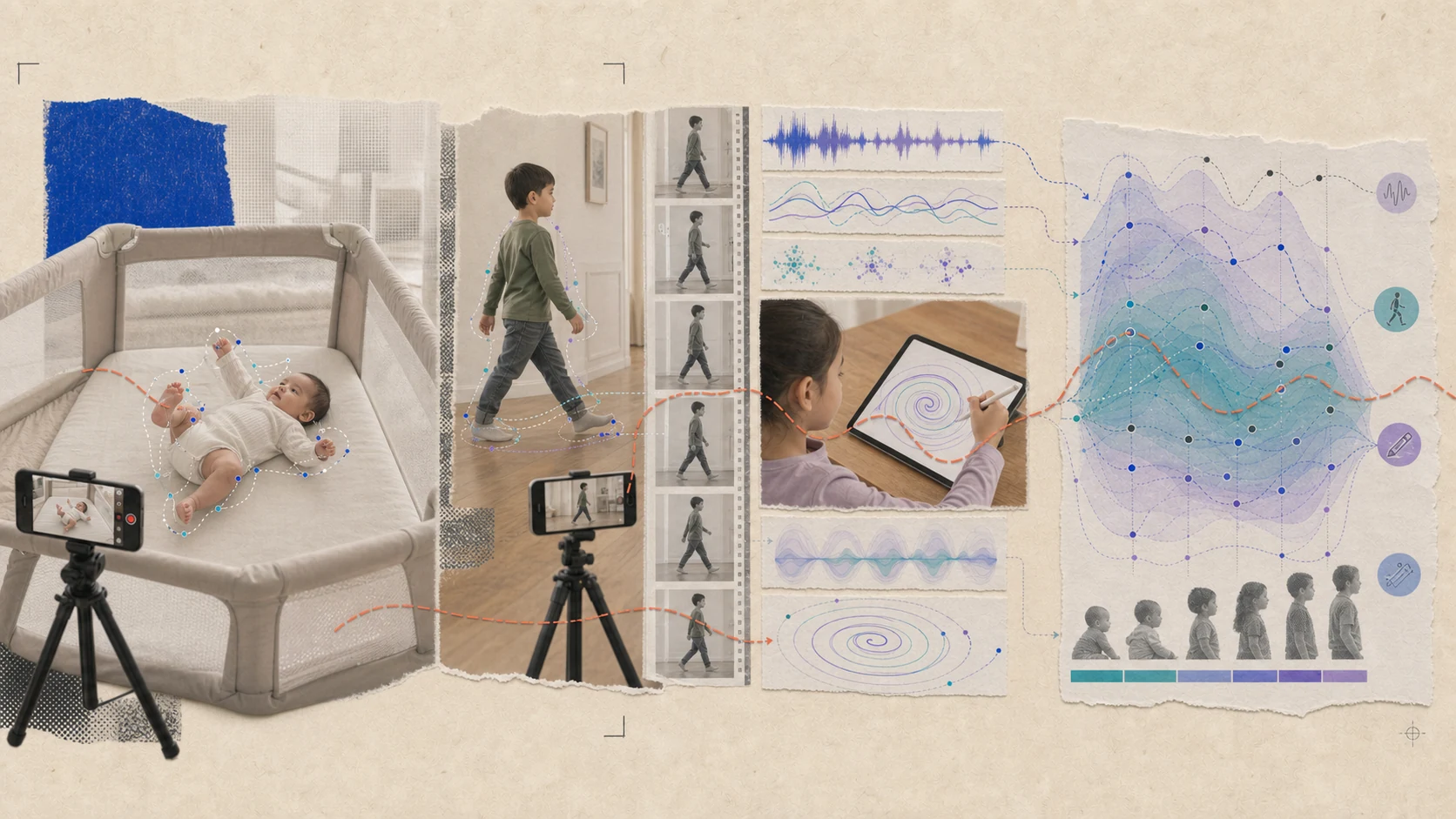
Rationale
Rare-disease cohorts are small, geographically dispersed, and commonly evaluated through brief, infrequent examinations. Clinical scores remain essential, but they can compress subtle variation and make progression or treatment response difficult to see. The measurement should be able to follow the patient home.
Repeated smartphone video and tablet-based motor tasks can transform movement and coordination into interpretable, patient-specific trajectories of disease state.
What we’re building
Short assessments designed to fit into home life while staying tied to established clinical measures.
A patient or caregiver records a guided movement task with a phone or completes a standardized drawing task on a tablet.
Pose trajectories, stability, symmetry, speed, accuracy, timing, and steadiness become digital biomarkers.
Repeated measurements form an individualized trajectory anchored to clinical assessments, treatment, and time.
The exam itself doesn't change. We capture its tasks digitally, quantify them, and repeat them at home, so progression and treatment response become visible between visits.